
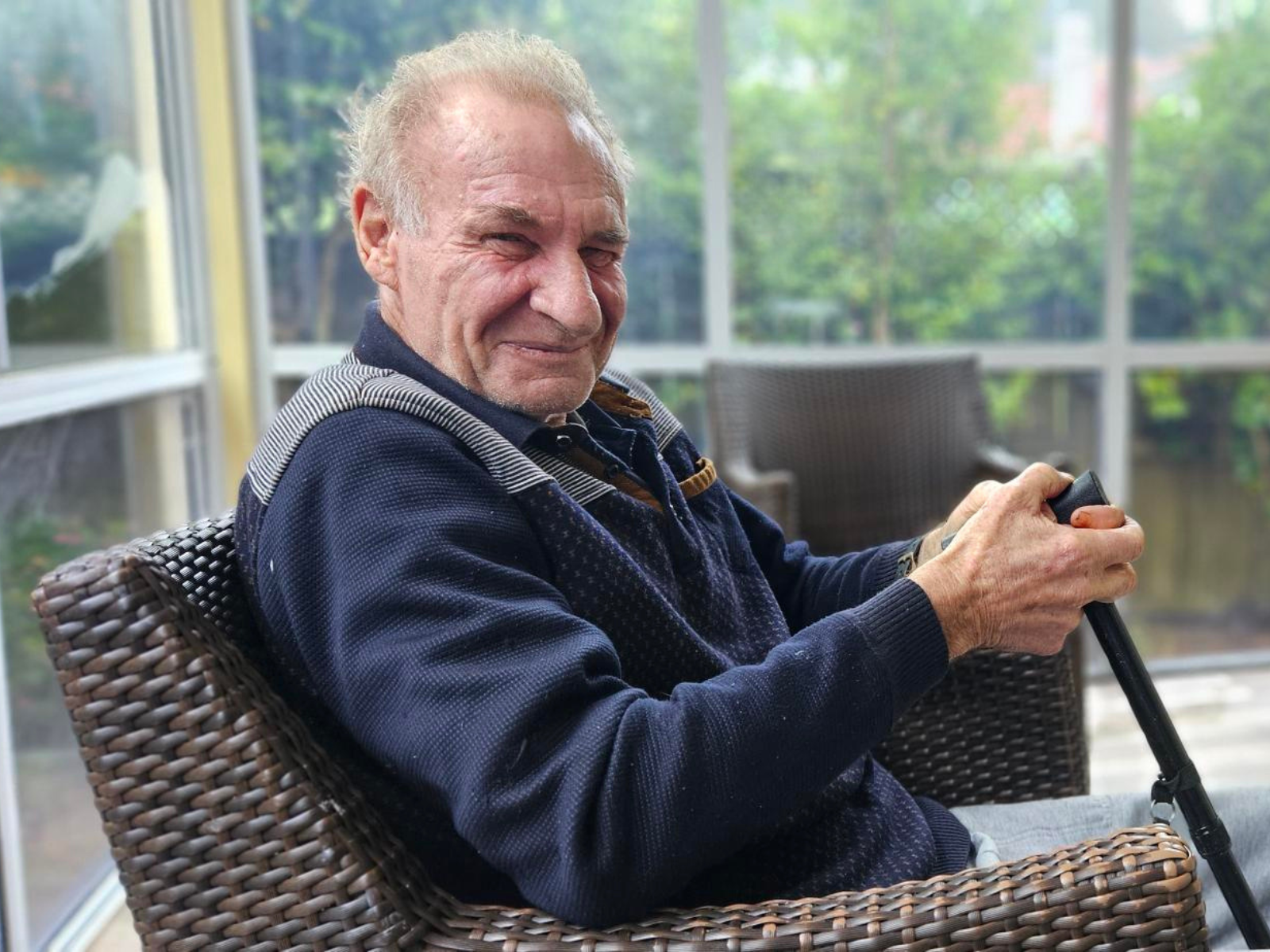
Keith's story: Building a different kind of life
Keith is sharing his multiple sclerosis journey on World MS Day, 30 May, to raise awareness and highlight the difference the right support can make.
Keith used to spend his days on building sites across Auckland. He loved the work, and as each structure went up, he felt like he was leaving something behind, his mark on the world built into the city itself.
He said he is proudest of the 180 arches he helped build on the Spanish Mission–style buildings of a learning institute in Albany.
One day at work, his supervisor asked him to find some chalk markings on the road to identify survey points. But when Keith looked down, he couldn’t see them. He had suddenly gone blind.
He was taken straight to a nearby clinic. After some initial checks, the doctors told him it could be multiple sclerosis. A week later, his vision returned, and he carried on with life as it was easier not to think about it.
Years passed. Then in 2023, the multiple sclerosis diagnosis was confirmed. This time, there was no brushing it aside. When Keith told his employer, he was let go.
A life changing referral
“The hardest part wasn’t the diagnosis,” he said. “It was leaving work and leaving my friend.”
In construction, having a solid workmate matters. After Keith left, his friend told him no one else wanted to partner up on site. Keith had always been the person he worked alongside.
Without work, Keith had to rely on Work and Income. He had family, but the relationships weren’t close.
Then came a referral that changed things. Through a referral from Work and Income to Kaikaranga, Keith found that he was eligible for disability support, including residential care. He was also connected with one of our Connector Case Managers, who quickly became a trusted partner and friend in navigating his new journey.
“She visits me several times a month. We talk regularly. She doesn’t have to, but she does.”
Our Connector Case Managers walk alongside people who have complex and multiple needs. They help make sense of supports that may be available to them, bring the right services together, and stay alongside people as things change, so they’re not left to figure it out on their own.
From rough patch to garden patch
Over time, Keith’s living situation stopped working for him. He enjoys connection, a laugh, a story. But where he was, those moments were missing in the residential home.
“There was no one to talk to really,” he said.
He also felt uneasy about his small garden patch. His vegetables, something he took pride in, were being damaged. Bit by bit, things broke down and it became clear a move to another care home might be the best option.
His Connector stepped in, working alongside him to find a better place and advocating for him to end his contract, so he could move in the best interest of his wellbeing. She visited new homes with him, helping him weigh up his options and making sure his voice stayed at the centre of every decision.
“The system can be hard to navigate, and things don’t always work the way they should. But no one should have to face that alone. We’re here to stay alongside people and keep working toward something better together,” his Connector said.
Keeping active and staying connected
Now, Keith lives in a new care home that suits him. Last December, his Connector went to his Christmas party. When she visits, Keith often sends her home with lettuce and tomatoes from his new garden.
“It’s better here,” he says. “I can talk to more people.” In his new home, he laughs easily. He sometimes jokes, introducing staff as his “girlfriend.” That playful spark in his eyes still there.
Keith keeps himself busy. He goes to a nearby church and travels to the Shore for an MS support group.
Till next time
Keith’s condition means he lives with constant pain. He has a sore spine which he manages through medication. He struggles with his balance and uses a cane for support. Recently, he and his Connector have been applying for a Lottery grant to get him a mobility scooter. They’ve tried five times, and each time, it’s been declined.
When she brings the news, Keith just shrugs it off. “That’s okay,” he says. “Come visit me again and we’ll apply again.”
And she does.