
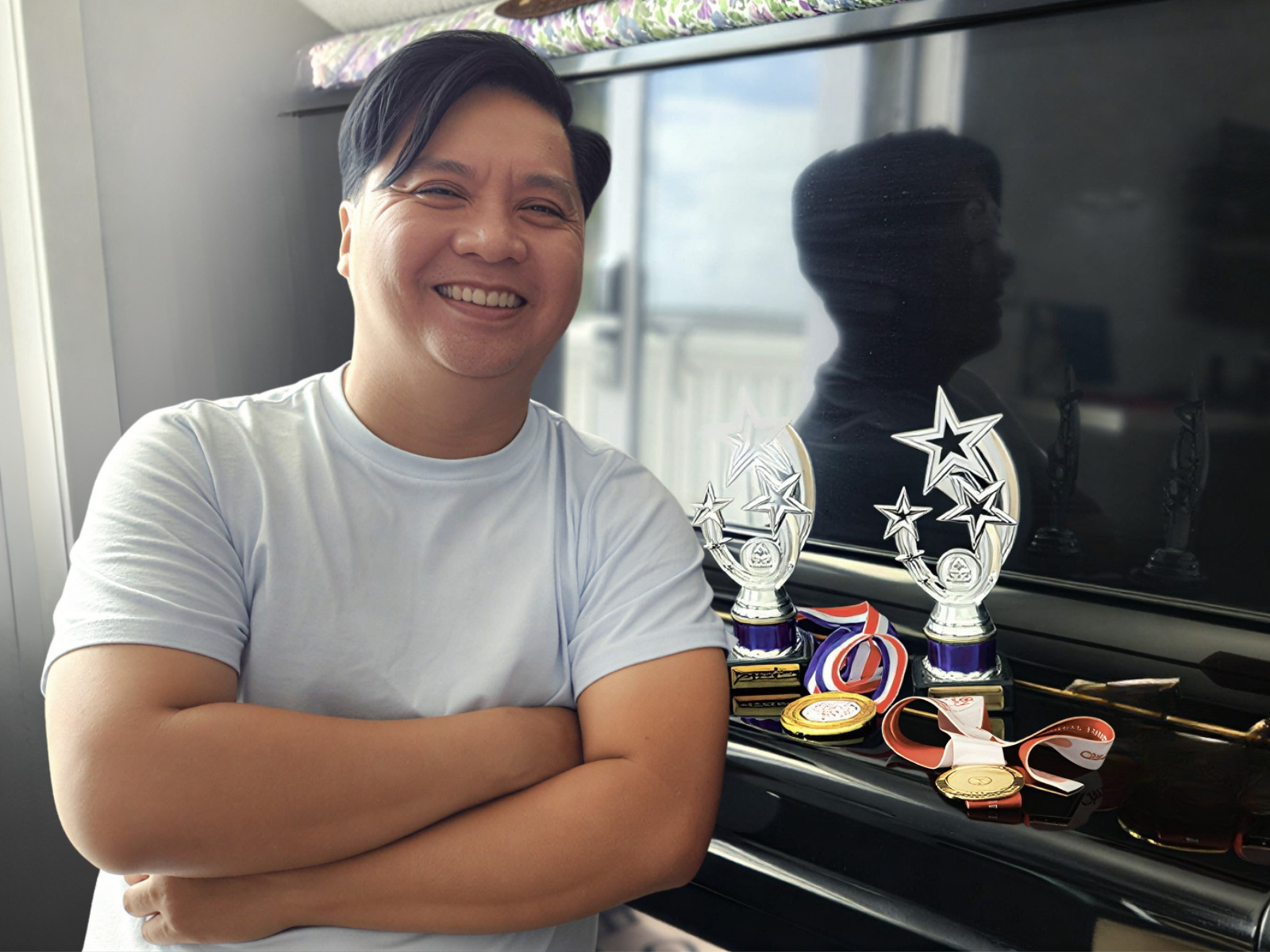
Andy's story: From isolation to participation
Read Andy’s journey from early-onset Parkinson’s and life on pause to national sporting success and renewed purpose.
In 2007, Andy moved to New Zealand seeking opportunity and security for his future family. Highly educated and ambitious, he built a successful career managing inventory, logistics and supply chains. He thrived on solving complex problems and stayed closely connected to friends and sport.
In his 40s, Andy’s world shifted. He was diagnosed with early-onset Parkinson’s. The news brought immediate questions about his health, his work and the future.
He was in Australia during the Covid years, and as the world narrowed for many, Andy’s own world became smaller and more isolated because of Parkinson’s.
“I was in a state of depression. I was hallucinating, crying a lot. I was just in my room alone, not wanting to talk to anyone, not watching TV, not listening to radio or music, unable to move, feeling pain, feeling useless and unwanted. As a person with disability, I felt like an orphan trying to fit in the world.”
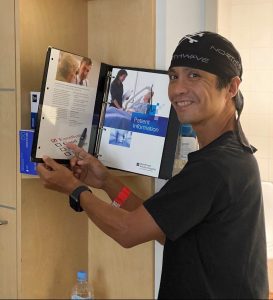
Photo: Andy in February 2021 preparing for deep brain stimulation surgery.
Andy underwent deep brain stimulation surgery, a procedure that implants electrodes in the brain to help manage movement symptoms. It improved his physical symptoms, but it did not restore the life he had known.
Faced with deep personal loss when his marriage broke down, Andy made a difficult decision: to return to New Zealand alone, believing the disability supports here would give him a better chance at rebuilding his life.
Getting by
He moved into a central city flat for access to services, even though the building itself was not accessible. Stairs were a daily barrier. He engineered ways to open heavy doors and carry laundry. He used a hoverboard to travel short distances, which was efficient, but not safe.
His Kaikaranga Connector would later reflect, “Even before formal supports were in place, Andy was already finding ways to adapt. His resilience and self-drive were clear from the beginning.”
But getting by was not the same as living well. His days revolved around medical appointments. He rarely left home unless necessary.
A turning point
In 2023, after hearing about Kaikaranga through flatmates and receiving a GP referral, Andy began working with a Connector Case Manager who has supported him ever since.
“Working with Kaikaranga was a turning point for me,” he says.
In their early conversations with his Connector, Andy was clear and analytical. He did not just describe symptoms. He described loss of purpose.
As a teenager, he had represented the Philippines as a national youth football player, competing internationally. Sport had once shaped his discipline, confidence and belonging. He missed that structure. He missed feeling part of something.
He spoke about not wanting to be a bystander on his own life. His Connector listened. She recognised that this was not just about symptom management, but identity.
The right supports at the right time
After hearing what mattered most to Andy, his Connector identified Choice in Community Living (CICL) as the right fit to help him move toward those goals. Through CICL, Andy would be able to access a support worker for personal care, household management and community participation.
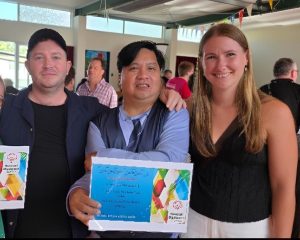
Photo: Andy with his support team from Special Olympics and Kaikaranga.
That practical layer mattered. It means he could leave the house safely and consistently, rather than feeling confined to his home. Assistance with daily tasks would reduce the stress and physical strain that had previously worsened his symptoms. With the right supports in place, Andy could focus on building the life he wanted and not just managing his condition.
His Connecter talked to him about Parkinson’s Association so he could access specialist information and peer support. She also arranged a St John’s Caring Caller service, providing regular, friendly conversations while we gradually expanded his social life again. Just as importantly, his Connector contacted Special Olympics on his behalf, opening the door to structured training and competition.
These were not isolated interventions. They were coordinated steps, aligned with goals: restoring participation, purpose and independence.
Back in the game
Today, Andy competes through Special Olympics and has won at national level. He plays football, basketball and badminton to strengthen different parts of his body and actively manage his condition.
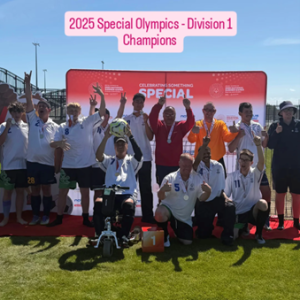
Photo: Andy’s team has won the 2025 Division 1 championship.
“Thanks to Special Olympics and organisations like Kaikaranga, I was able to bounce back,” he says. “My teammates, my support workers and my Connector are now my new-found friends and family.
“With Special Olympics, you get opportunities to meet people, get involved in sport and take part in community service. That’s why I volunteer. It’s rewarding to give back to society.”
Beyond competition, Andy volunteers in sports programmes for children with disabilities, serves on a regional planning committee and has delivered an inspirational talk at a residential home. His Connector watched him deliver his talk.
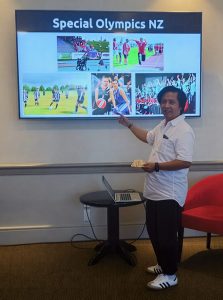
Photo: Inspirational talk with the elderly in residential home.
A whole life
Outside sport, he values simple moments: walking to the park, visiting the beach, feeling the wind and sun. Small things, fully experienced.
He actively works with a team of 12 support workers who help him have days that are structured and purposeful. He continues to ask, “What can I improve?”
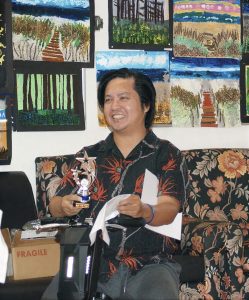
“I have achieved all of my goals except one,” Andy reflects. “I want a whole life.” A life that includes companionship, shared plans and new chapters.
“My success is Kaikaranga’s success,” he says.
His Connector adds, “The supports matter, but Andy’s drive is what makes it happen.”
Andy is not defined by Parkinson’s. He is defined by purpose, resilience and contribution. He once solved system gaps in his professional life. Now, he has rebuilt his life, deliberately, patiently and with others alongside him.